
Domino case studies
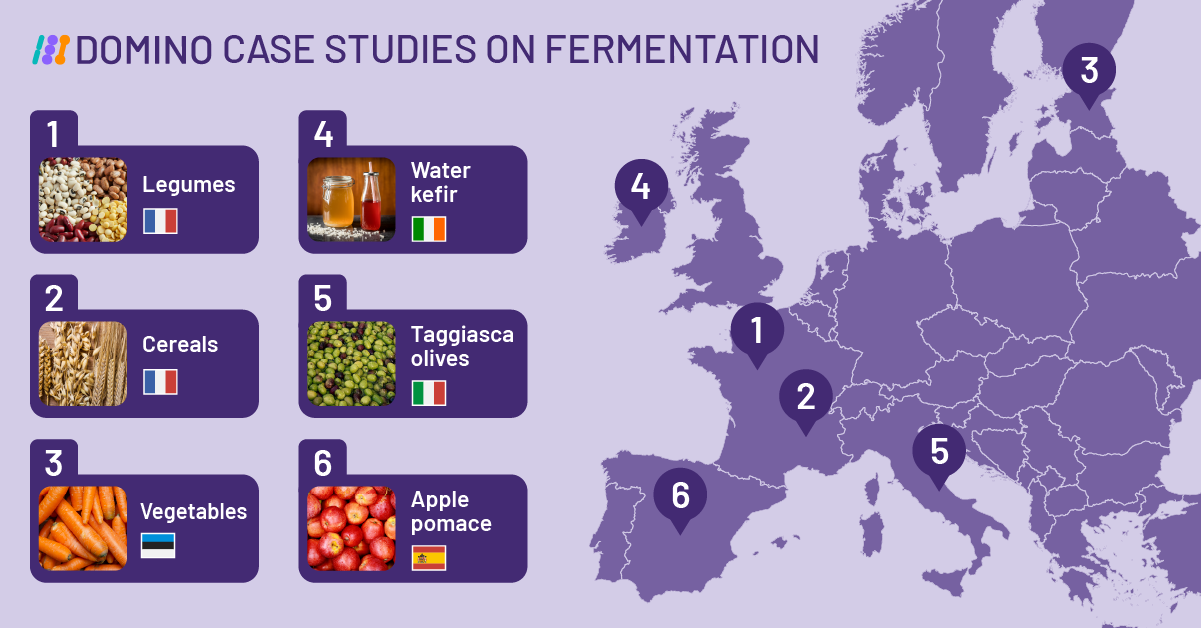
Within the DOMINO project, researchers from five countries are developing novel fermented foods that support healthy and sustainable food systems.
Legumes
Researchers from INRAE (France) are working on the prototype for a fermented legume-based product, based on lentils (green, corail) and chickpeas. The microbial consortia have also been studied for both nutritional objectives (eg: anti-nutritional factors reduction) and sensorial elements (e.g., reducing unpleasant flavours and exhibiting cheesy-like tastes). The researchers are currently working on the effect of various pre-selected microbial consortia on the aromatic profile of the end product.
Cereals
Researchers from IRD (France) are also involved in the development of a drinkable, yogurt-like product made from einkorn.
Vegetables
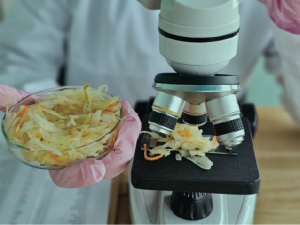
TFTAK (Estonia) researchers are working with fermented vegetables, including products such as kimchi, sauerkraut, fermented carrots, and fermented kohlrabi. These are already well-known products existing in many cuisines, either as sides or parts of a dish. Additionally, the TFTAK team is exploring the use of fermented vegetables in spreads and snacks.
Water kefir
Teagasc (Ireland) researchers are developing a novel water kefir, using the waste streams of Brewers spent Grain and Apple Pomace as the basis for the fermentation. The aim is to use microbial capabilities to ferment a plant-based product for the generation of a healthy, tasty beverage without flavourings or additives.
Read more:
Taggiasca olives
Researchers from University of Turin (Italy) are focused on fermented Taggiasca olives, with the aim of improving the sensorial profile and health impacts, as well as sharpening the industrial process. The anticipated final product is an enhanced version of the Taggiasca olive, enriched with beneficial health properties, particularly due to its increased vitamin B12 content and the presence of short-chain fatty acids (SCFAs). These bioactive compounds are expected to contribute to improved nutritional value and potential health benefits.
Read more:
- Traina C, Ferrocino I, Bonciolini A, Cardenia V, Lin X, Rantsiou K, Cocolin L. Monitoring the yeasts ecology and volatiles profile throughout the spontaneous fermentation of Taggiasca cv. table olives through culture-dependent and independent methods. Int J Food Microbiol. 2024;417:110688. doi:10.1016/j.ijfoodmicro.2024.110688.
- DOMINO Case Study: Advancing Fermentation Sciences with Table Olives
Apple pomace
The CSIC (Spain) case study is focused on developing new fermented foods based on apple pomace, the main by-product of cider making. There is evidence that apple pomace can be used to rationally design and produce fermentable carbohydrates with intestinal microbiota modulatory capability. Therefore, fermentation is aimed at improving the prebiotic characteristics of apple pomace, while maintaining product safety.