Fermented foods
Discover fermented foods from around the world.
Kimchi
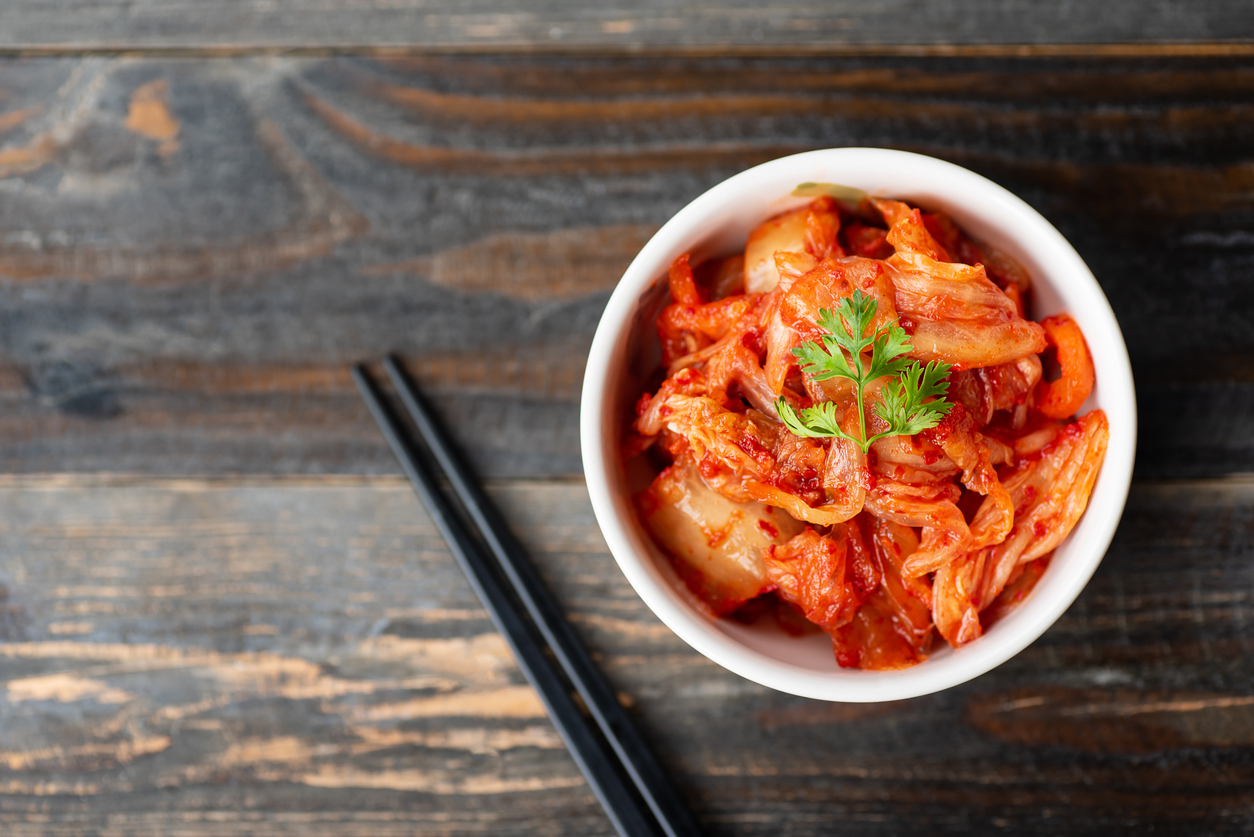
Kimchi is a spicy, sour dish made by fermenting vegetables (usually napa cabbage and radish) with garlic, chili, and other seasonings. The fermentation process allows beneficial lactic acid bacteria to naturally develop and preserve the kimchi.
Common recipes
- Classic Baechu Kimchi (Napa cabbage)
- Kkakdugi (cubed radish kimchi)
- Vegan kimchi (without fish sauce or shrimp)
- White kimchi (without gochugaru – less spicey!)
- Jeon (savoury kimchi) pancakes
- Kimchi makguksu (buckwheat noodles with kimchi and cucumber)
Kimchi dishes can be enjoyed on their own, commonly as a side dish, or also used in soups, stews, rice dishes, etc.
Historical background
Originated over 2,000 years ago in Korea.
How to make at home
Tools:
Large mixing bowl, gloves, fermentation jar/glass container.
Basic steps:
- Salt cabbage and let sit for 1–2 hours (brining process)
- Rinse and drain.
- Mix spice paste (gochugaru, garlic, ginger, fish sauce).
- Combine with brined cabbage and other vegetables and pack into jar.
- Ferment at room temp for 1–3 days, making sure to ‘burp’ daily, then refrigerate.
Fermentation tips
- Maintain room temperature (~22–28°C). The warmer, the quicker the fermentation will occur.
- Make sure to ‘burp’ the kimchi at least once a day, to help release gas as CO₂ builds up – this avoids overflow and maintains a safe fermentation environment
- Days of fermentation depend on temperature and your taste preferences – you can taste the kimchi as it ferments to specify it to your liking.
Nutritional profiles & potential health benefits
Kimchi is low in calories, high in fibre, vitamins A, B, and C. Kimchi offers multiple health benefits due to its rich content of lactic acid bacteria and bioactive compounds. These include antioxidant, anti-inflammatory, antimicrobial, and gut microbiota-modulating effects, which may contribute to improved digestion, immune function, and reduced risk of chronic diseases (Valentino et al., 2024).