Fermented foods
Discover fermented foods from around the world.
Kombucha
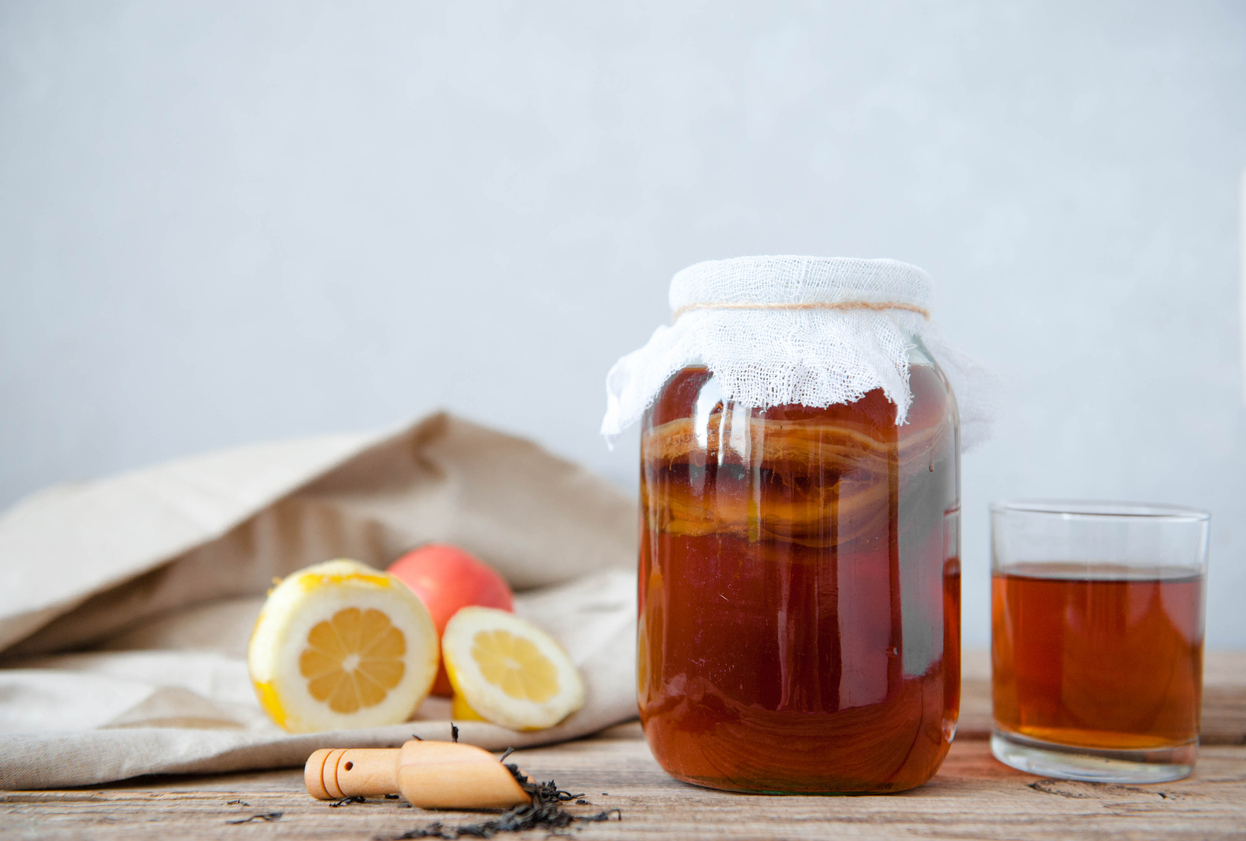
Kombucha is a fizzy, slightly tangy and sour, naturally fermented beverage made by combining brewed tea and sugar with a SCOBY – a Symbiotic Culture of Bacteria and Yeast.
Common recipes
- Basic black tea* kombucha
- Flavoured second ferment (e.g., adding fruits like mango, or flowers like hibiscus, etc…)
*You can also experiment with different types of teas, and an endless amount of experimentation can be discovered when adding flavours to the second fermentation!
Historical background
While there are many origin stories and myths competing to claim the debut of kombucha, it is widely believed to originate in Northeast China around 220 BCE.
How to make at home
Tools: Large glass jar, cloth cover, pressure-safe (i.e., swing-top) bottles for second fermentation
Basic steps:
- Brew tea and dissolve sugar (~100 grams of sugar per litre).
- Cool and add SCOBY + ~100 ml of already ready kombucha (non pasteurised)
- Cover with cloth and ferment for ~7–10 days
- Bottle and refrigerate to halt fermentation process
- Optional: Add fruit, flowers, etc, directly to the bottles for a second-ferment with flavourings. Leave unrefrigerated for ~2-3 days to pressurise, then refrigerate to halt fermentation process.
Fermentation tips
- Maintain room temperature (~22–28°C). The warmer, the quicker the fermentation will occur.
- Days of fermentation depend on temperature and your taste preferences – you can taste the kombucha as it ferments to specify it to your liking.
Nutritional profiles & potential health benefits
Kombucha contains organic acids, antioxidant plant compounds, and B vitamins produced by its bacteria-yeast culture, which may have antioxidant, anti-inflammatory, antimicrobial, blood-sugar-regulating, and even anti-cancer effects (Tandhanskul et al., 2025).